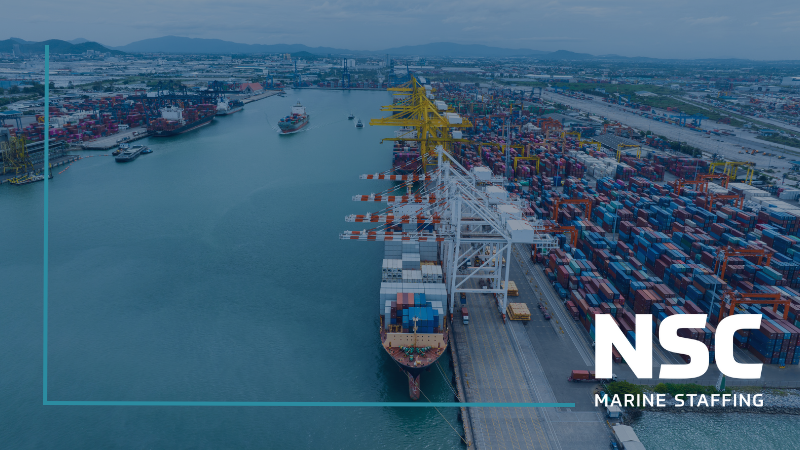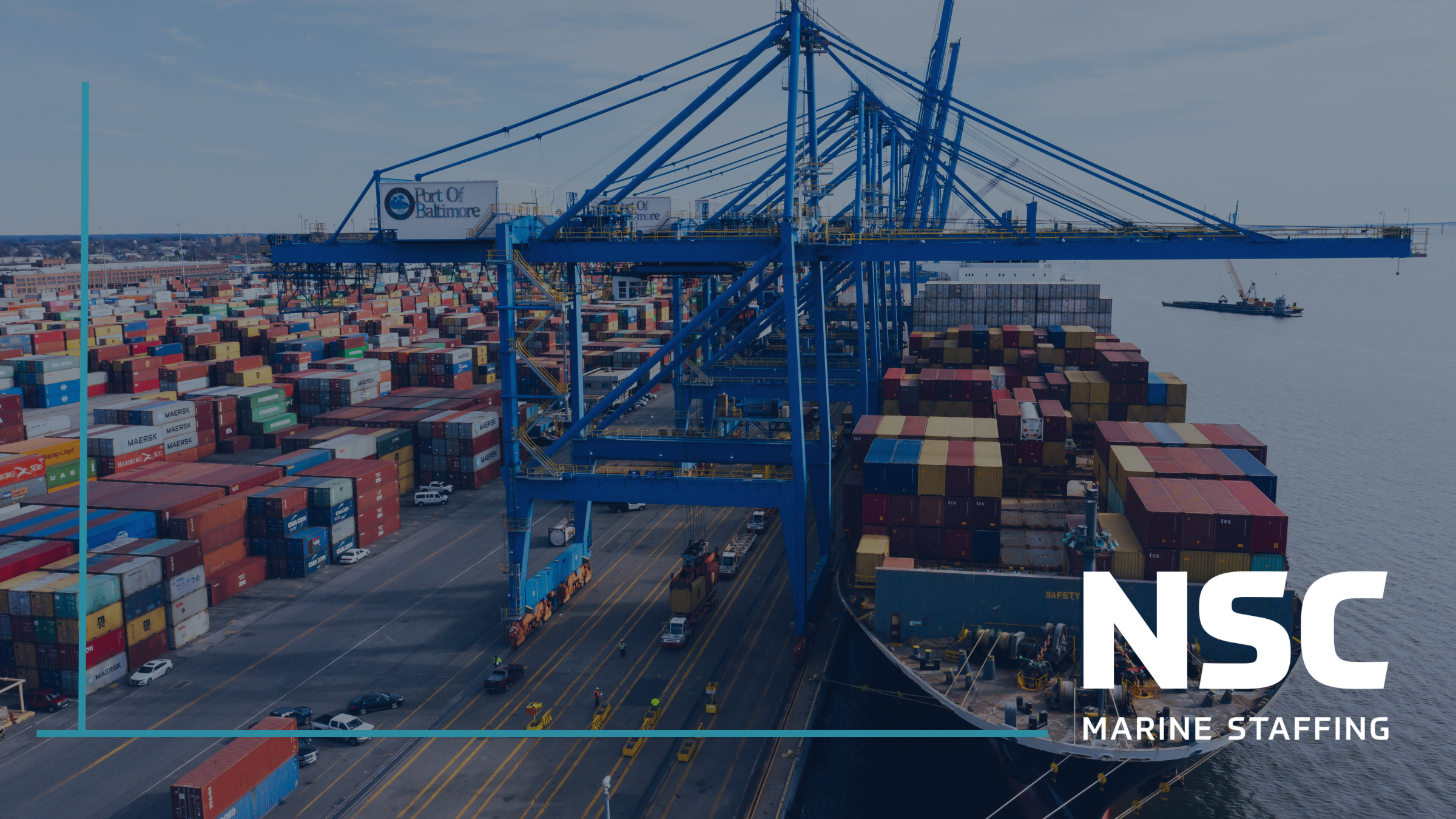
Cargo handling sits at the center of maritime logistics. Ports, terminals, and marine logistics providers are under pressure to move more volume, faster, with fewer disruptions and greater scrutiny on safety and compliance. Cranes, systems, and yard layouts all matter, but the performance of the operation still comes down to the people who plan, move, and secure cargo every shift. Understaffed or unevenly staffed cargo handling operations create bottlenecks, safety exposure, and schedule risk for shippers and carriers. For marine employers, the question is how to staff cargo handling roles with people who understand both port operations and the broader supply chain context. This article looks at key cargo handling roles in maritime logistics, common workforce challenges at ports and terminals, and how NSC's marine staffing model helps employers build crews that keep vessels and cargo moving safely and predictably.
Cargo handling is where vessel schedules, yard capacity, and customer expectations all converge. Any weakness in how cargo is received, stowed, shifted, or discharged quickly shows up as delays, congestion, and additional costs across the supply chain.
Ports and terminals face:
In this environment, staffing is not just about filling shifts. It is about ensuring the right people are in the right roles to support safe, efficient cargo movement on every tide and every call.
Every port and terminal is structured differently, but a core set of roles consistently drive cargo handling performance.
Critical roles include:
Staffing these roles with people who understand port operations, safety expectations, and the rhythm of vessel work is central to maintaining throughput and schedule integrity.
Ports and terminals often operate with a mix of core employees, casual labor pools, and third-party support. Without a structured workforce approach, several predictable challenges emerge.
Typical issues include:
These challenges can erode vessel productivity, increase safety exposure, and add cost if not addressed through deliberate staffing strategy.
In high-tempo marine environments, technical certifications are important, but they are only part of the picture. Port and terminal employers benefit from focusing on a set of core attributes in addition to job-specific skills.
Important qualities include:
Candidates who reflect these traits are more likely to support safe, efficient cargo handling than those treated as interchangeable general labor.
Effective cargo handling staffing aligns labor capacity with expected vessel calls, yard conditions, and equipment availability. This requires more than simply staffing to an average headcount.
Ports and terminals can improve alignment by:
When staffing and scheduling work together, ports can absorb variability in calls and cargo mix with fewer disruptions.
Cargo handling operations are safety critical. Lifting operations, working at height on vessels, handling hazardous cargo, and operating heavy equipment around people all require disciplined adherence to safety standards and regulations.
Staffing decisions should account for:
Staffing models that prioritize safety and compliance in hiring and deployment help reduce incidents and preserve the operational reputation of ports and terminals.
Many ports and marine logistics providers work with staffing partners, but not all partners understand the specific demands of cargo handling and maritime supply chains. A specialized marine staffing partner brings domain-specific capability rather than general labor alone.
Such a partner can:
When staffing partners operate at this level, they become an extension of port and terminal operations rather than a last-minute fix.
NSC is a specialized marine staffing agency providing cleared, certified, and shipyard-ready personnel across the United States for more than 25 years. NSC delivers fully screened marine labor to support shipbuilding, repair, conversion, dry-dock, offshore, and port operations at scale, with workforce programs built to maintain schedule integrity, meet performance standards, and reduce labor-driven risk in demanding maritime environments.
For cargo handling and maritime logistics, NSC helps employers by:
Cargo handling is where marine logistics strategies become real. NSC helps ports, terminals, and marine logistics providers staff those operations with reliable, safety-conscious workers who understand the demands of maritime supply chains.
To explore how NSC can support staffing for your cargo handling and maritime logistics operations, connect with our marine staffing team and start a conversation about your facilities, vessel mix, and workforce needs.
Set your course for success in the maritime industry. From shipyards to offshore operations, skilled marine professionals keep global commerce moving. Whether you're advancing your career or searching for experienced tradespeople to strengthen your crew, NSC is your trusted partner on every voyage.
Dry-dock and major repair windows compress a large amount of work into a short, fixed period driven by class, regulatory, and commercial requirements. Steel, piping, mechanical, electrical, coatings, and tank work often compete for the same people and the same spaces. If labor planning is left until a vessel is already on the blocks, shipyards and operators can find themselves short on key trades, relying on overtime, and pushing non-critical scopes into future dockings. Proactive labor planning helps ensure the right mix and volume of trades is available when the window opens, which supports schedule integrity, safety, and cost control.
While every docking is different, most require a core set of marine trades and support roles. Priority positions typically include welders and shipfitters for hull and structural work, pipefitters and mechanical personnel for systems and machinery, marine electricians for power and controls, and blasters and painters for hull, tank, and topside coatings. Support roles such as firewatch, tank watch, riggers, and general yard labor are also essential, because they allow skilled trades to work safely and efficiently. Labor planning should estimate peak headcount needs for each of these categories across all vessels expected in the yard.
NSC is a specialized marine staffing agency that provides cleared, certified, and shipyard-ready personnel across the U.S. NSC evaluates candidates for trade proficiency, verified shipyard experience, safety compliance, and readiness for regulated yard environments, then supplies welders, shipfitters, pipefitters, fabricators, electricians, blasters, painters, firewatch, tank watch, and other support roles aligned to dry-dock schedules. NSC also assumes responsibility for screening, credential checks, documentation, payroll, and compliance management, so internal teams can focus on planning and executing repair scopes while having access to qualified labor when docking windows open.
Discover the perfect candidates for your organization with our dedicated staffing support team. We're here to connect you with skilled job seekers, tailored to your unique needs. Reach out today, and let us help you build a winning team!
Job seekers, we've got your back too! Explore our extensive job openings and take the next step in your career by going to our jobs page to search and apply today.
STAFFING FOR MARINE CONSTRUCTION | MARINE CONSTRUCTION STAFFING | MARINE CONSTRUCTION JOBS
CARGO HANDLING: STAFFING SPECIALISTS IN MARITIME LOGISTICS