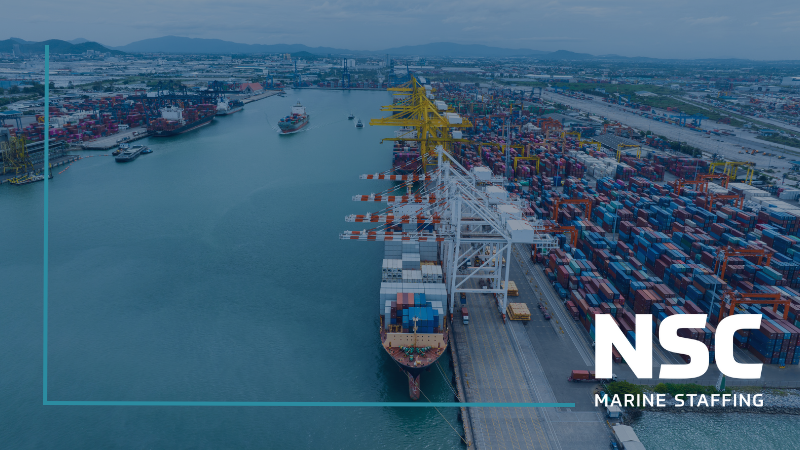
Ports sit at the intersection of vessel movements, cargo flow, safety, and commercial pressure. Harbor masters, marine operations teams, terminal supervisors, and logistics coordinators all have to work in sync to keep traffic moving while maintaining safety and compliance. As vessel sizes grow, schedules tighten, and supply chains remain unpredictable, staffing these roles has become a strategic concern for port leaders. The challenge is not just filling shifts. It is building a workforce model that can support safe harbor management on the water and efficient logistics on the dock, day after day. This article looks at port operations staffing from a high level, exploring the critical harbor and landside roles that keep ports running, the pressures shaping their workforce needs, and how a specialized marine staffing partner can help align people, skills, and schedules without increasing administrative burden.
Ports and terminals operate under constant scrutiny. Safety regulators, shipping lines, cargo owners, and local communities all have an interest in how well harbor and terminal operations are managed. At the same time, ports are expected to move more volume, faster, with fewer disruptions.
Staffing sits at the center of this pressure. Under resourced or uneven harbor and logistics teams can lead to:
For modern ports, workforce planning is no longer a back office function. It is a core part of operational strategy and risk management.
On the water side, harbor management roles coordinate vessel movements, enforce safety rules, and respond when conditions change. These positions require a mix of local knowledge, regulatory awareness, and calm decision making.
Critical harbor side roles often include:
These roles directly influence how safely and predictably vessels move through a port. Gaps or instability in this part of the workforce can quickly ripple into delays and risk.
On the landside, terminal and logistics teams translate vessel calls into cargo flow. Their work determines how quickly containers, breakbulk, and project cargo move through the port and onto road or rail.
Key logistics focused roles include:
When these roles are understaffed or filled with personnel who lack port experience, operations slow, congestion grows, and customer confidence erodes.
Port and terminal leaders are navigating a set of workforce pressures that mirror, and in some cases amplify, broader marine labor challenges.
Common issues include:
These pressures make it harder to rely on ad hoc hiring and informal coverage plans. Ports need a more deliberate approach to building and sustaining harbor and logistics teams.
In this environment, workforce reliability becomes a competitive advantage. Ports that can staff harbor and logistics roles predictably are better positioned to manage disruptions and maintain service levels.
A reliable port workforce model typically includes:
By building around reliability instead of minimum headcount, port leaders can better absorb variability in schedules and cargo flows.
Many ports work with staffing providers, but not all partners are equipped for the realities of marine and port operations. A general labor model that emphasizes speed over fit can create more risk than it solves.
A marine focused staffing partner should be able to:
When a staffing partner operates at this level, they function as an extension of the port's operational planning, not just a source of additional names on a roster.
NSC is a specialized marine staffing agency providing cleared, certified, and shipyard ready personnel across the United States for more than 25 years . NSC delivers fully screened marine labor to support shipbuilding, repair, conversion, dry dock, offshore, and port operations at scale, with programs designed to maintain schedule integrity, meet performance standards, and reduce labor driven risk in demanding maritime environments .
For port and terminal leaders, NSC's marine staffing mandate offers:
As port operations grow more complex and expectations rise, having the right people in harbor management and logistics roles becomes a central part of performance. NSC helps marine employers build and sustain those teams, so ports can keep vessels and cargo moving safely and predictably.
To explore how NSC can support staffing for your harbor management and logistics roles, connect with our marine staffing team and align your workforce strategy with your operational plans for the years ahead.
Set your course for success in the maritime industry. From shipyards to offshore operations, skilled marine professionals keep global commerce moving. Whether you're advancing your career or searching for experienced tradespeople to strengthen your crew, NSC is your trusted partner on every voyage.
Dry-dock and major repair windows compress a large amount of work into a short, fixed period driven by class, regulatory, and commercial requirements. Steel, piping, mechanical, electrical, coatings, and tank work often compete for the same people and the same spaces. If labor planning is left until a vessel is already on the blocks, shipyards and operators can find themselves short on key trades, relying on overtime, and pushing non-critical scopes into future dockings. Proactive labor planning helps ensure the right mix and volume of trades is available when the window opens, which supports schedule integrity, safety, and cost control.
While every docking is different, most require a core set of marine trades and support roles. Priority positions typically include welders and shipfitters for hull and structural work, pipefitters and mechanical personnel for systems and machinery, marine electricians for power and controls, and blasters and painters for hull, tank, and topside coatings. Support roles such as firewatch, tank watch, riggers, and general yard labor are also essential, because they allow skilled trades to work safely and efficiently. Labor planning should estimate peak headcount needs for each of these categories across all vessels expected in the yard.
NSC is a specialized marine staffing agency that provides cleared, certified, and shipyard-ready personnel across the U.S. NSC evaluates candidates for trade proficiency, verified shipyard experience, safety compliance, and readiness for regulated yard environments, then supplies welders, shipfitters, pipefitters, fabricators, electricians, blasters, painters, firewatch, tank watch, and other support roles aligned to dry-dock schedules. NSC also assumes responsibility for screening, credential checks, documentation, payroll, and compliance management, so internal teams can focus on planning and executing repair scopes while having access to qualified labor when docking windows open.
Discover the perfect candidates for your organization with our dedicated staffing support team. We're here to connect you with skilled job seekers, tailored to your unique needs. Reach out today, and let us help you build a winning team!
Job seekers, we've got your back too! Explore our extensive job openings and take the next step in your career by going to our jobs page to search and apply today.
STAFFING FOR MARINE CONSTRUCTION | MARINE CONSTRUCTION STAFFING | MARINE CONSTRUCTION JOBS
STAFFING FOR HARBOR MANAGEMENT AND LOGISTICS ROLES