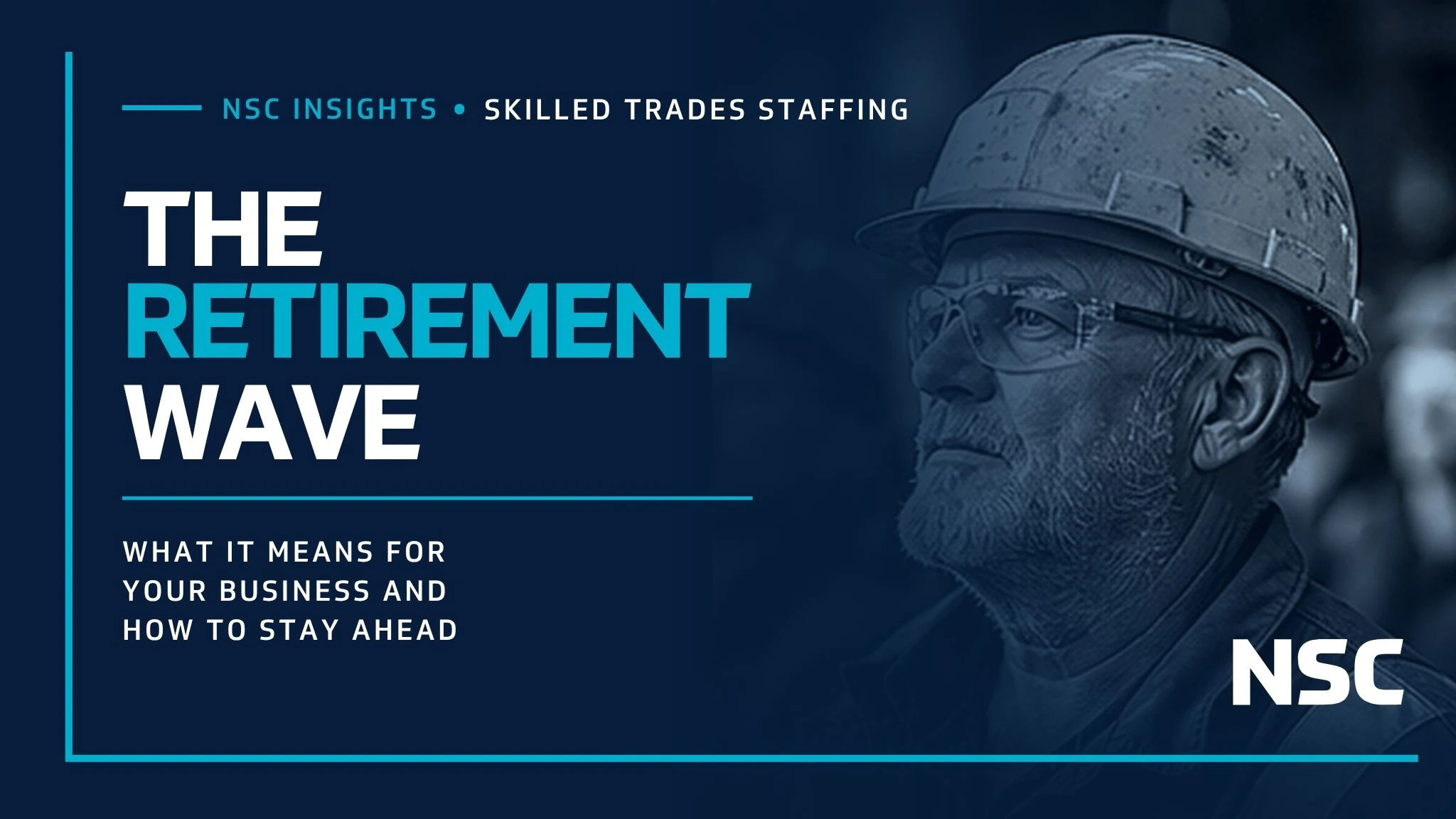

Skilled trades shortages present a growing challenge for organizations across a wide variety of industries, from construction and manufacturing to critical infrastructure projects. As experienced trades professionals retire and fewer new workers enter the field, project timelines can become harder to maintain and workforce planning grows more complex. Delays in securing qualified talent may also increase operational strain, forcing teams to stretch internal resources or postpone critical phases of work.
This article from our team at NSC staffing explores how staffing firms help companies navigate these challenges by providing market insights, supporting workforce development, and offering flexible staffing solutions. Readers will learn how access to data on labor trends informs recruitment decisions, how training and development programs strengthen retention, and how scalable staffing approaches allow organizations to respond to fluctuating project demands.
Through consultation with expert staffing partners, organizations can evaluate hiring timelines, identify skill gaps, benchmark compensation, and build a staffing strategy that aligns directly with project schedules. This level of planning reduces last-minute hiring pressure, shortens time-to-deployment, and supports more consistent productivity across job sites
The demand for skilled trades professionals continues to outpace supply in many regions across the country. For organizations managing complex builds, maintenance cycles, and infrastructure projects, that gap can affect timelines and workforce stability. Experienced staffing firms support skilled trades recruitment through industry insights, workforce development, and flexible staffing models that help companies plan more effectively and respond to changing project demands.
Staffing firms have a wide range of experienced and insights on skilled trades labor trends, including regional availability, compensation benchmarks, and emerging skills in demand. These insights help organizations understand market conditions and make recruitment decisions based on evidence rather than assumptions. By analyzing shifts in labor supply and demand, staffing companies can help their clients implement hiring strategies with greater precision and anticipate potential workforce gaps.
Staffing partners share this information so employers can make practical decisions about hiring based on real project timelines and business goals. Having up-to-date data on labor availability and wage trends makes workforce planning more efficient and helps ensure skilled trades recruitment is based on current market conditions rather than guesswork.
Recruitment partners do more than just place staff: they can facilitate connections to training programs, apprenticeships, and continuing education opportunities, enabling candidates to build and refine their skills. This focus on professional growth enhances retention by giving employees clear pathways to advance within their trades. Employers benefit from a workforce that is increasingly capable and experienced, contributing to more consistent and efficient project outcomes.
By leveraging staffing firms' development resources, companies can complement internal retention strategies. Supporting workforce development in this way strengthens the talent pipeline and ensures organizations continue to have access to skilled and motivated personnel for future projects.
Project needs for skilled trades staff can vary significantly over time, creating temporary labor needs. Staffing firms have a talent pipeline at the ready, and offer flexible solutions that allow organizations to scale their workforce quickly to match demand, whether for short-term projects, peak periods, or unexpected surges.
This adaptability helps maintain productivity and project timelines without committing to permanent hires for temporary requirements. Access to pre-screened, certified professionals ensures that additional staff meet technical expectations from day one.
Flexible staffing provides operational agility, enabling companies to adjust labor capacity efficiently while keeping projects on schedule and supporting consistent outcomes.
Addressing the skilled trades shortage isn't about one quick fix: it takes better insight, ongoing workforce development, and the flexibility to adapt as projects evolve. Staffing firms bring forward labor market data that helps organizations make clearer hiring decisions and understand what talent is realistically available. They also help connect trades professionals to training opportunities that strengthen skills and support long-term retention. When workloads increase or timelines shift, flexible staffing options make it easier to scale teams without stretching internal resources too thin.
With the right strategy in place, companies can approach skilled trades recruitment with greater confidence and consistency. A consultation with a staffing partner can help refine that strategy and ensure workforce planning supports both immediate project demands and long-term operational goals.
Be a driving force in building communities and powering essential industries. From construction and electrical to plumbing and beyond, skilled trades professionals are the backbone of progress. Whether you're pursuing your next opportunity or seeking top-tier talent, NSC connects expertise where it's needed most.
Several factors are contributing to the current shortage of skilled trades professionals. A large segment of the experienced workforce is reaching retirement age, while fewer new workers are entering technical fields.
At the same time, demand for construction, infrastructure, manufacturing, and energy projects continues to grow nationwide across a variety of industries. This imbalance creates competition for qualified electricians, welders, technicians, and other trades specialists.
In many regions, local talent pools are limited, making recruitment even more complex. Companies are often competing for the same candidates, which can extend hiring timelines and increase pressure on internal teams already managing active projects and strict deadlines.
When skilled trades positions remain unfilled, projects can slow down or face scheduling disruptions. Teams may need to redistribute workloads among existing employees, which can reduce efficiency and increase the risk of burnout. In some cases, delayed hiring can push back key project milestones or limit the scope of work that can be completed on time.
Operational leaders are then forced to make adjustments that may affect budgeting, forecasting, and overall resource planning. Labor shortages also make it more difficult to respond quickly to unexpected project expansions or urgent maintenance needs, leaving organizations with less flexibility to adapt when circumstances change.
Stabilizing a skilled trades workforce requires more than filling open roles as they arise. Organizations benefit from understanding local labor trends, building access to qualified candidate pipelines, and supporting ongoing workforce development. Leveraging staffing partners can provide visibility into regional availability, wage expectations, and certification requirements. In addition, connecting trades professionals to training and upskilling opportunities strengthens retention and long-term workforce capability.
Flexible staffing models can also help organizations scale labor levels during peak demand without committing to permanent increases. Taken together, these strategies create a more balanced approach to skilled trades recruitment and help companies maintain operational continuity across varying project cycles.
Discover the perfect candidates for your organization with our dedicated staffing support team. We're here to connect you with skilled job seekers, tailored to your unique needs. Reach out today, and let us help you build a winning team!
Job seekers, we've got your back too! Explore our extensive job openings and take the next step in your career by going to our jobs page to search and apply today.
STAFFING FOR SKILLED TRADES | SKILLED TRADES RECRUITMENT | SKILLED TRADES STAFFING AGENCY | SOLVING SKILLED TRADES SHORTAGES